
Keeping Pets Safe at Christmas: Simple Steps to Avoid Seasonal Hazards

The festive period can be a joyful time for the people and animals we share our lives with, but it also comes with a few hidden risks for pets. At CareDogs, we work with dogs every day and understand how quickly curiosity can get the better of them. Below is a straightforward guide to the most common Christmas dangers, backed by trusted veterinary sources, so you can help keep the animals in your life safe and well.
1. Toxic festive foods
Chocolate
Chocolate contains theobromine, which is toxic to dogs even in small amounts. Dark chocolate is especially dangerous.
Christmas pudding, mince pies and fruit cake
These often contain raisins, currants or sultanas - all highly toxic to dogs, even in tiny quantities.
Xylitol
Found in sugar-free sweets, chewing gum and some peanut butters, xylitol can cause a sudden, dangerous drop in blood sugar.
Leftover bones
Cooked bones splinter easily and can cause choking or internal injuries.
2. Decorations and wrapping
Tinsel and ribbon
These can cause blockages if swallowed.
Baubles and ornaments
Glass and plastic decorations can shatter, posing risks if stepped on or eaten.
Fairy lights
Chewed cables can lead to burns or electric shock. Keep wires tucked away or covered.
3. Christmas trees and plants
Pine needles
These can irritate paws or throats, and may cause stomach upset if eaten.
Tree water
Standing water in the tree base can contain fertilisers or bacteria.
Toxic plants
Poinsettia, holly and mistletoe can cause stomach upset or more serious illness if ingested.
4. Visitors and changes in routine
The festive period usually means more people, noise and disruption - all of which can unsettle dogs.
Helpful steps:
Set up a quiet space where your dog can take themselves away.
Keep walks and feeding times as regular as possible.
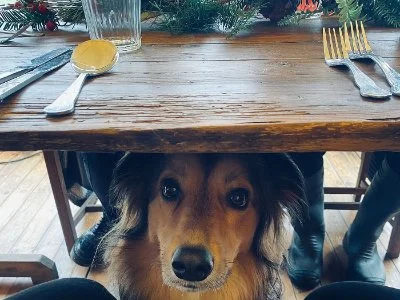
Ask guests not to slip dogs scraps, however persuasive their begging face.
5. Cold weather risks
Frost, ice and gritting salt can all irritate paws. Salt can be harmful if licked off, so wipe paws after walks and keep older dogs warm, dry and comfortable.
What to do in an emergency
If you think your dog has eaten something harmful or is showing signs of illness, contact your vet immediately - speed makes a difference.
A helpful resource is the Animal PoisonLine (run by the Veterinary Poisons Information Service):
01202 50 9000
Sharing safe, happy time with our dogs is at the heart of what we do at CareDogs. By keeping an eye on these common seasonal risks, you help ensure pets stay healthy and families can enjoy the festive period without worry.
Sources
British Veterinary Association, PDSA, Blue Cross, RSPCA, Vetinary Poisons Information Service
